

Taipei International Book Exhibition Launches Lecture Series-Educational Dialogues on the Decolonization of Indigenous Knowledge
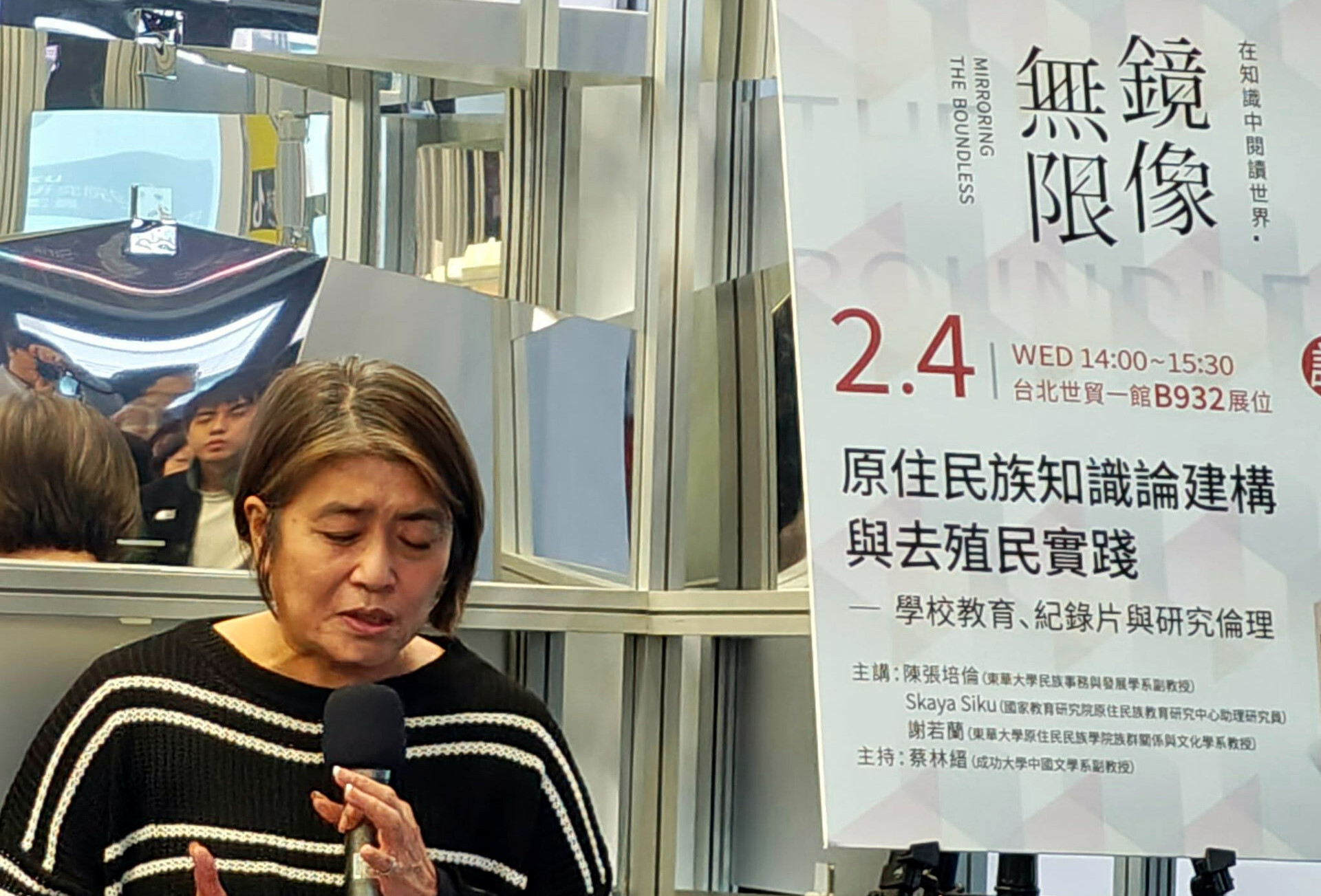
As part of the Taipei International Book Exhibition, National Taiwan University Press has curated a lecture series titled "Mirrors.Infinity-Reading the World through Knowledge." Through publications and public dialogue, the series continues to explore how knowledge shapes our understanding of the world. One of the lectures, entitled "Constructing Indigenous Epistemologies and Decolonial Praxis-School Education, Documentary Film, and Research Ethics," brought together Professor and Director Bavaragh Dagalomai Jolan HSIEH(謝若蘭)of the Center for International Indigenous Affairs at National Dong Hwa University; Associate Professor Tunkan Tansikian CHEN Chang-Pei-Lun(陳張培倫)of the Department of Indigenous Development and Social Work at National Dong Hwa University; and Assistant Research Fellow Skaya Siku from the Indigenous Education Research Center of the National Academy for Educational Research. The session was moderated by Associate Professor TSAI Lin-Chin(蔡林縉)of the Department of Chinese Literature at National Cheng Kung University.
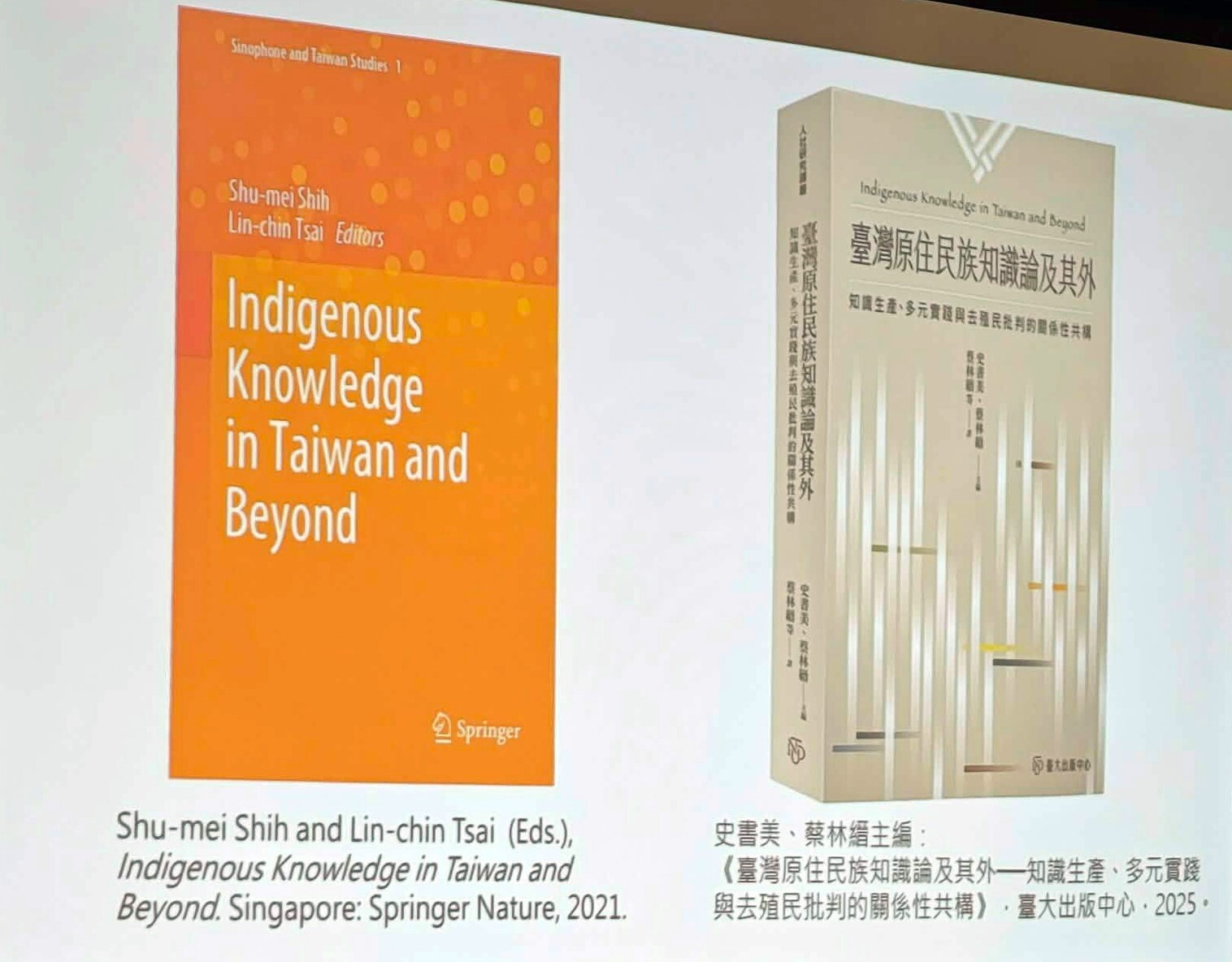
The lecture centered on the book Indigenous Knowledge in Taiwan and Beyond. Rather than a conventional book launch, the event represented a stage in a long-term, transnational dialogue bridging academic research and lived practice. The origins of the volume can be traced back to an international conference held in 2018 at UCLA, attended by the three speakers and other Indigenous scholars and practitioners. That gathering focused not merely on research findings, but on a more fundamental question: how Indigenous knowledge can be decolonized within contemporary academic systems.
Following the conference, selected papers were published as an English-language volume. In recent years, additional research experiences and theoretical reflections were incorporated, resulting in the current Chinese edition. Director HSIEH emphasized that this publication process itself reflects a sustained process of collective knowledge-making, underscoring that Indigenous knowledge is never "completed" once and for all, but continuously discussed, revised, and practiced across different contexts.
During the lecture, HSIEH further explained that Indigenous knowledge should not be treated merely as a research object or cultural resource, but as a comprehensive system encompassing worldviews, ethical frameworks, and relational ontologies. Decolonization, she argued, is not simply a matter of restoring names or narratives; it requires critical reflection on who has the authority to define knowledge, who is entitled to interpret it, and whether the production and circulation of knowledge continue to operate within academic power structures inherited from colonial histories. When Indigenous experiences are reduced to academic capital, knowledge remains extractive; only when knowledge is embedded in relationships, responsibilities, and community contexts can it truly remain alive.
Associate Professor Tunkan Tansikian responded from a legal and institutional perspective, noting that although Indigenous rights have gradually entered formal systems, mainstream legal and educational institutions continue to be grounded primarily in Western epistemological frameworks. As a result, Indigenous understandings of relationships between humans, nature, and society are often inadequately recognized. Drawing on judicial cases, he highlighted the critical role of school education in cultivating students' capacity to engage with diverse knowledge systems.
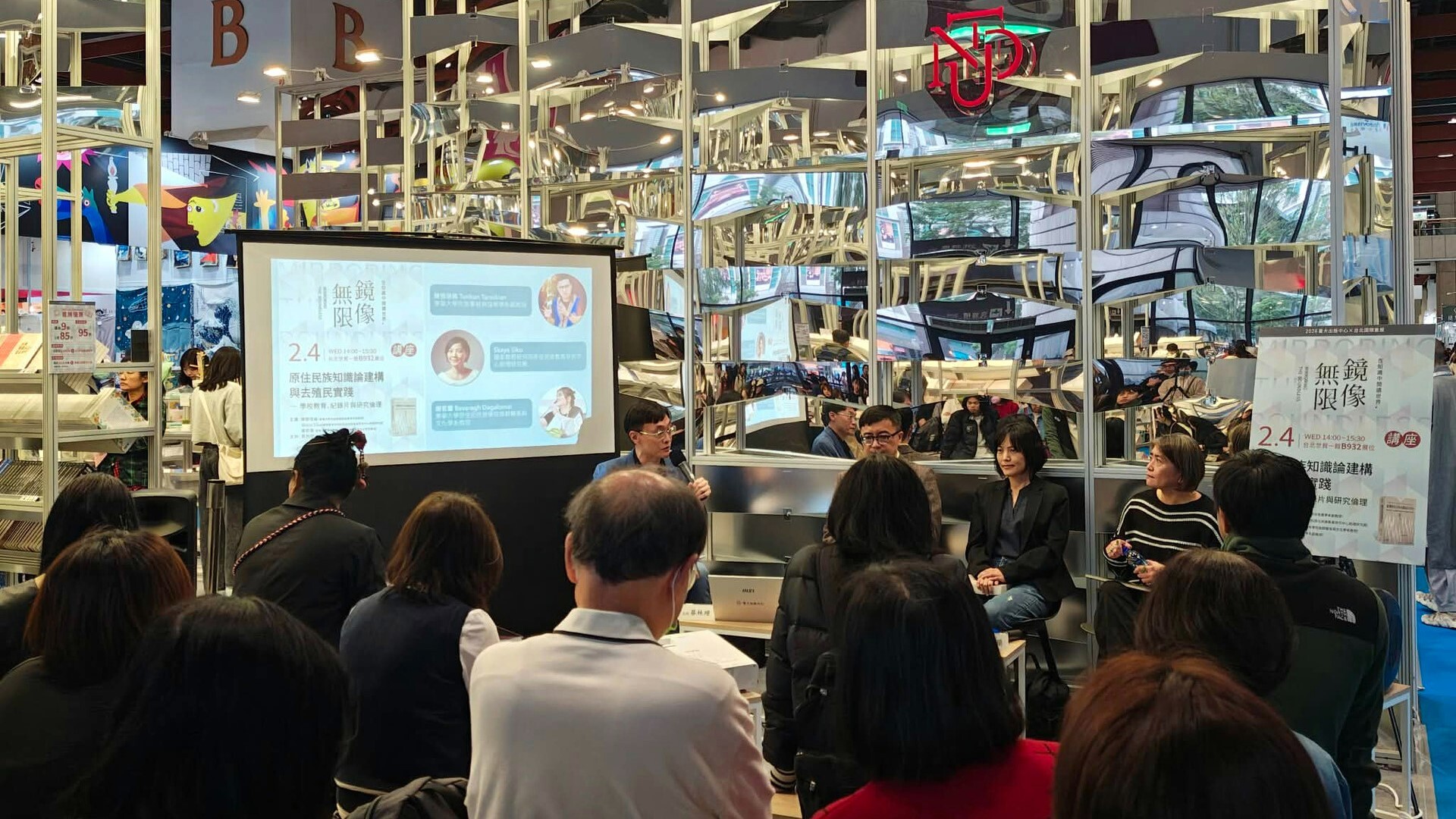
Assistant Research Fellow Skaya Siku approached the topic from educational practice and documentary filmmaking, sharing experiences of using film as a pedagogical tool. She emphasized that visual media are not merely teaching materials, but also shape perspectives of viewing, narration, and ethical responsibility, calling on educators to guide students in critically examining the positionality and power relations embedded in images.
HSIEH also participated in the lecture together with members of the Indigenous Women's Empowerment Program Team. In the post-lecture discussion, she further connected the decolonization of Indigenous knowledge to educational practice and institutional reform within education systems. She pointed out that once Indigenous knowledge enters academia, it often risks being decontextualized-through language, writing conventions, and temporal frameworks that conflict with prevailing academic evaluation and educational systems. Indigenous women, despite their long-standing engagement in education, cultural transmission, and community practice, are frequently excluded from curriculum design, research planning, and institutional decision-making.
HSIEH concluded by emphasizing that decolonization is never a slogan, but a series of concrete choices made within educational systems and teaching practices. Through systematic empowerment initiatives that support Indigenous participation in textbook development, co-teaching, research projects, and public dialogue-while placing particular emphasis on the epistemic capacities of Indigenous women-schools can begin to address structural knowledge gaps. Such efforts enable Indigenous knowledge to be understood and practiced within education systems in ways grounded in ethics and relational responsibility, offering a tangible pathway from epistemological reflection to institutional transformation.