

NDHU Releases 2025 Sustainability Report, Highlighting Achievements in Interdisciplinary Practice
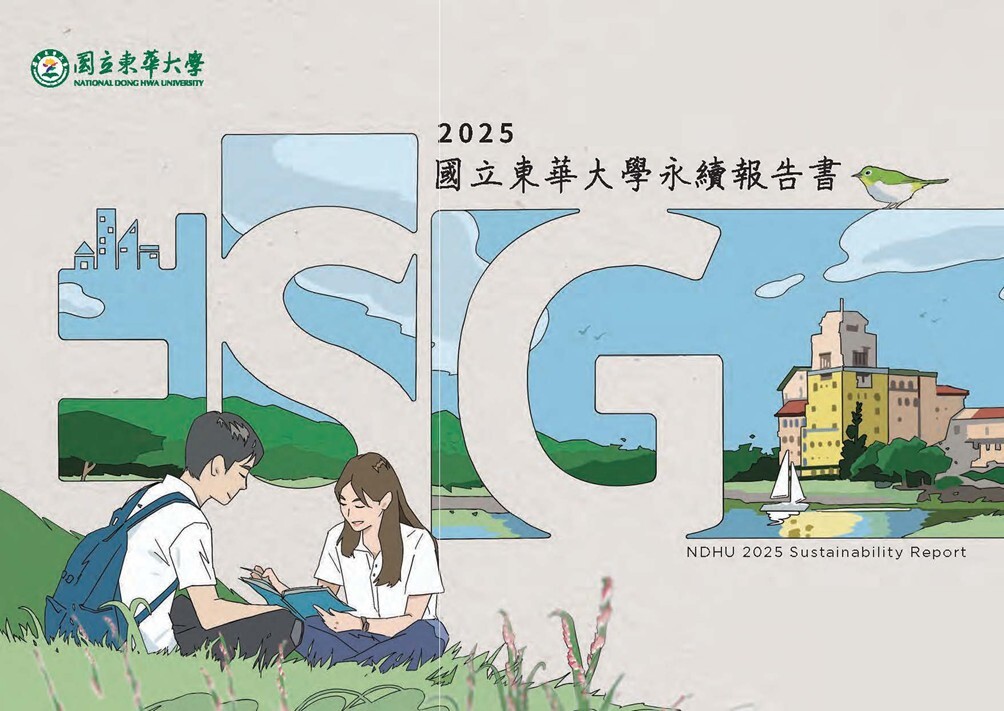
National Dong Hwa University (NDHU) has recently released its 2025 Sustainability Report, highlighting the University's achievements over the past year in talent development, sustainable campus initiatives, campus well-being, social engagement, and university governance. From the campus energy transition and marine conservation to Indigenous cultural preservation and international engagement, the report showcases how NDHU faculty and students translate academic knowledge into concrete actions to address environmental and social challenges. Through transparent information disclosure, the report also documents the University's ongoing sustainability efforts.
NDHU has published sustainability reports annually since 2020 and has prepared them in accordance with the Global Reporting Initiative (GRI) Standards since 2021, continuously improving sustainability disclosures and university governance. In 2025, the University collected 1,045 valid responses through an online stakeholder survey. Following review and approval by the Committee for Sustainability Development, eight material topics were identified, including campus disaster prevention measures, creating a safe and healthy campus, generative AI application planning, and enhancing bilingual competencies among faculty and students. These topics provide an important basis for sustainability reporting and ongoing improvements in university governance.
In the area of environmental sustainability, faculty and students from the Department of Opto-Electronic Engineering collaborated with the Green Energy Learning Community Cooperative and industry mentors to establish a solar photovoltaic demonstration system designed for on-site electricity generation and consumption. In 2025, the system generated 4,549.3 kilowatt-hours (kWh) of electricity, meeting approximately 50% of the daily electricity needs of the Borderless Sustainable Living Consumer Cooperative. By integrating energy education with practical applications, the initiative supports the development of renewable energy on campus.
As of 2025, the total installed solar photovoltaic capacity at NDHU's Shoufeng and Meilun campuses had reached 5,542.66 kilowatts-peak (kWp), with an estimated annual financial benefit of approximately NT$3.16 million. By 2027, the University plans to install solar photovoltaic systems at four additional parking shelters and two covered outdoor sports courts, further expanding its renewable energy capacity.
NDHU is also gradually developing an Energy Management System (EMS). Initial planning focuses on street lighting near the Zhixue Gate and the Science and Engineering Building I, incorporating air-conditioning controls linked to class schedules, mandatory nighttime load shedding and restoration, and real-time energy consumption monitoring. The University plans to integrate heat pump operations and energy consumption data into the same platform, expanding the scope of energy management, improving energy efficiency, and reducing campus carbon emissions.
In addition, a research team from the Institute of Marine Biology has undertaken seagrass restoration and habitat improvement efforts in Houwan, Kenting. The team also completed surveys of seagrass habitats at 55 intertidal and 26 subtidal sites in Penghu. Through biodiversity surveys, seagrass nursery trials, and habitat monitoring, the research provides essential baseline data to support future blue carbon research and marine conservation efforts.
In the areas of social engagement and cultural preservation, the Department of Indigenous Development and Social Work collaborated with Taipei National University of the Arts to form the "Millet Ark" team. The team was invited to participate in the 2025 meeting of the Subsidiary Body on Article 8(j) and Other Provisions of the Convention on Biological Diversity (SB8J-1). Through illustrated books, traditional musical instruments, and visual storytelling, the team shared Taiwan Indigenous communities' experiences in millet cultivation revival and traditional ecological knowledge with international audiences, fostering cultural preservation and cross-cultural exchange.
To enhance the transparency and credibility of its sustainability disclosures, NDHU worked with Leadership Management Consulting Co., Ltd. to prepare the report and commissioned TÜV NORD Taiwan to conduct independent third-party assurance in accordance with AA1000AS v3. By regularly reviewing its sustainability performance and responding to stakeholder concerns, NDHU will continue to improve university governance and integrate its strengths in teaching, research, and social engagement as it advances toward its vision of becoming a sustainable university.
The full 2025 Sustainability Report is available through the University's sustainability website. Readers are invited to visit the NDHU Sustainability Development Center website to learn more about the University's sustainability initiatives and achievements.
#NDHU、# Sustainability Report